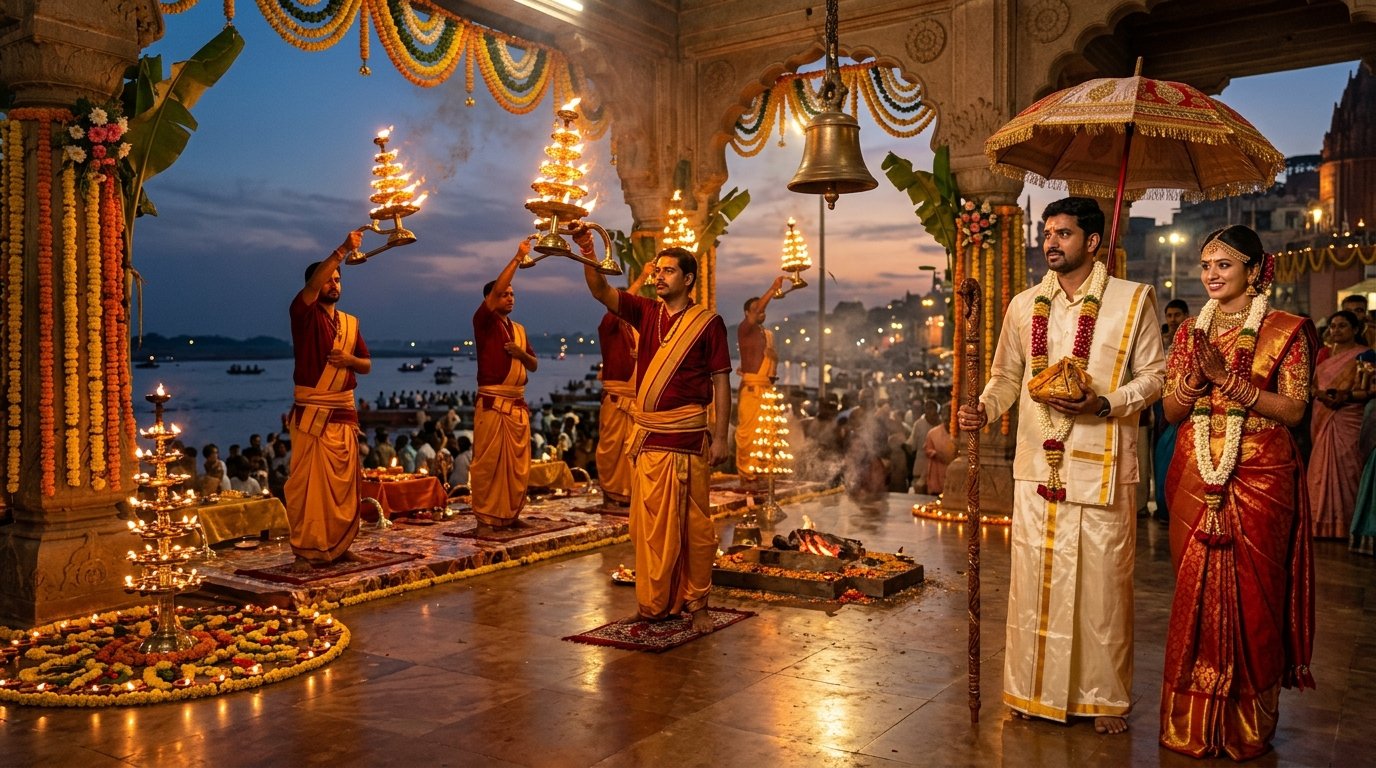
On the crisp morning or golden twilight of a traditional Telugu wedding (Pelli), few moments elicit more affectionate smiles, playful banter, and heartfelt emotion than the Kashi Yatra. Clad in a pristine raw silk dhoti, carrying a carved wooden walking staff (dandam), wearing silver padukas, and shielded by an intricately embroidered silk umbrella (Kasi Yatra Godugu), the groom (Vara) sets out on foot. Having finished his Vedic bachelorhood (Brahmacharya and Snatakam), he announces his intention to renounce worldly ambitions and journey northward to Kashi (Varanasi)—the eternal city of Lord Shiva—to dedicate his life to ascetic contemplation, Vedic study, and spiritual liberation (Moksha).
Before he can take more than a few ceremonial strides away from the mandapam, the pathway is blocked by the smiling yet earnest father of the bride (Pellikuthuru Thandri). Bearing sacred betel leaves, coconuts, and traditional silk attire, the father entreats the young scholar to pause. He gently expounds the ancient Vedic truth that of all four stages of human existence, Grihasthashrama (the sacred householder life) is the very bedrock of dharma. He promises his virtuous, accomplished daughter’s hand in marriage, proposing that they walk life’s sacred pilgrimage together as divine companions (Dharmapatni). The groom relents, accepts the proposal with joy, and turns back toward the wedding hall to embark on the grandest voyage of his life.
For centuries across Andhra Pradesh, Telangana, and the global Telugu diaspora, this ritual has remained a beloved theatrical highlight. Yet in recent wedding seasons, visionary Telugu families and premier luxury wedding planners have asked a transformative question: Why should the sacred energy of Kashi remain merely a symbolic metaphor in our wedding rituals?
"The groom declared he was walking twelve hundred kilometers to Varanasi to seek the blessings of Lord Vishwanatha and Maa Ganga. Instead of letting that promise fade after the mock walk, we bring the eternal fire, authentic Vedic Acharyas, and roaring Shankhnaad of Kashi directly to his feet. The groom does not need to leave the mandapam—Kashi arrives for him."
By arranging an authentic Varanasi Ganga Aarti for weddings directly following the Kashi Yatra or as the grand celestial prelude to the evening reception, Telugu families create an emotional crescendo that bridges the classical heritage of the South with the timeless, primordial flame of the North.
The Millennia-Old Spiritual Cord: Why Kashi Reverberates in Telugu Hearts
To understand why the integration of an authentic Ganga Aarti evokes such intense reverence at a Telugu wedding, one must appreciate the deep civilizational cord connecting the Telugu people to Varanasi. This is not a newly minted wedding trend; it is the physical realization of centuries of shared devotion.
In classical Telugu literature, the 14th-century poet Srinatha immortalized the sacred city in his epic poetic masterpiece, the Kasi Khandamu. For generations of Telugu families in coastal Andhra, Rayalaseema, and Telangana, undertaking the arduous pilgrimage to Kashi—carrying sacred well water from Rameswaram to perform Abhishekam for Kashi Vishweshwara, and bringing back consecrated Ganga Jal to immerse at the southern tip—has stood as the supreme spiritual milestone of a lifetime.
Even today, Varanasi’s historic riverfront features centuries-old Telugu institutions, including the celebrated Kedar Ghat, Hanuman Ghat, and traditional Telugu choultries where sacred Sanskrit recitation has echoed uninterrupted for hundreds of years. Telugu households universally honor Mother Annapurna Devi and Kashi Vishwanatha Swamy as supreme household guardians.
"When our grandparents saw five authentic Vedic Acharyas from Varanasi raise the blazing 108-wick brass deepams on our wedding stage in Hyderabad, there was complete silence across eight hundred guests. My grandfather had tears in his eyes; he held my hands and whispered that having the sacred light of Kashi at my wedding meant our marriage was solemnized under the direct gaze of Vishwanatha."
When senior Vedic Acharyas step onto the wedding dais adorned in traditional saffron-and-maroon silk pitambars, carrying consecrated conch shells and sacred brassware cast in the ancient artisan lanes of Banaras, they do not present a stage show. They manifest an ancient pilgrimage experience that honors the family’s ancestors and sanctifies the couple's matrimonial vows.
Traditional Symbolic Kashi Yatra vs. Elevated Ganga Aarti Integration
While traditional wedding protocols are preserved with complete ritual integrity, adding the live Varanasi Ganga Aarti elevates the experience from a lighthearted family skit into an unforgettable spiritual landmark:
| Dimension | Traditional Kashi Yatra Setup | Elevated Varanasi Ganga Aarti Integration |
|---|---|---|
| Ritual Meaning | Groom symbolically renounces bachelorhood; bride's father persuades him to accept marriage. | Fulfills the symbolic promise by bringing the living divine presence of Kashi to the couple. |
| Sensory Environment | Light background nadaswaram/shehnai; informal crowd movement around the entrance. | Full sensory immersion: resonant live Shankhnaad, Bhimseni camphor aromas, synchronized temple chimes. |
| Visual Magnificence | Simple ceremonial umbrella, walking stick, and coconut offerings on the aisle. | Towering 7-tiered 108-wick brass deepams rotating in geometric symmetry against floral backdrops. |
| Elder & Guest Engagement | Guests watch casually while chatting or taking snacks before the main muhurtam. | Complete pin-drop silence and spontaneous collective chanting; elders fold hands in heartfelt tears. |
| Sacred Tangible Blessing | Standard turmeric rice (akshatalu) and temple theertham from local vendors. | Sealed copper kalashes of consecrated Kashi Ganga Jal brought directly from the holy river for the family. |
| Cinematic Photography | Casual documentary photos of the walk and conversational laughter. | Iconic, award-worthy portraiture of the couple framed by sweeping amber flame silhouettes. |
Where Does Ganga Aarti Fit in the Telugu Wedding Timeline?
Telugu weddings are renowned for their meticulous adherence to Vedic timing (Shubha Muhurtham) and rich multi-day ceremonies. Depending on your venue logistics and family preference, our experienced coordinators recommend three optimal placement scenarios:
Scenario 1: The "Kashi Reconciliation" Transition (Morning or Afternoon)
In this sequence, the Ganga Aarti serves as the dramatic bridge between the mock pilgrimage and the main wedding rituals. Once the bride's father convinces the groom to embrace married life, the groom and father walk together to the main mandapam. As they reach the dais, the conch shells blast in triumphant unison. The Varanasi priests perform a 25-minute ceremony that sanctifies the ground, cleanses the space of negative energies, and culminates in a royal welcome (Eduru Sannaha) for the bride's grand entrance under the floral canopy (Pula Pallaki or Addath తెర).
Scenario 2: Golden Hour Sunset Prelude to the Royal Reception
For destination weddings and luxury evening gatherings—such as celebrations at palace properties or lakeside resorts—the Ganga Aarti is performed at twilight (Sandhya Vela). Just as dusk settles and reception guests arrive, the Aarti begins on an elevated outdoor lawn or amphitheater. Guests are treated to an ethereal spiritual spectacle, setting an elegant, reverent tone for the evening before the couple's grand entrance and dinner gala.
Scenario 3: Post-Mangalasutram Celestial Blessing (Mangala Harathi)
Following the sacred binding moments of Jeelakarra Bellam, Mangalasutram, and Talambralu, when the couple stands united as husband and wife, the Varanasi Acharyas step forward to perform the ultimate Maha Mangala Harathi. The newlyweds stand before the flaming deepams together, receiving the direct Vedic blessings (Ashirvachanam) of Kashi Vishwanatha and Maa Ganga, accompanied by the distribution of consecrated Ganga Jal.
Technical Specifications & Setup Requirements
Delivering a flawless, temple-grade experience at premium 5-star hotels and heritage convention centers requires rigorous technical discipline and safety protocols:
Elevated wooden platform (1.5ft to 2ft height). Minimum 12ft vertical flame clearance from chandeliers, floral ceilings, or tent fabric.
Zero paraffin or toxic petroleum oils. Certified Grade-A Bhimseni camphor ensuring clean burning, fragrant aroma, and zero soot on Italian marble or fabrics.
High-gain wireless condenser mics for priests, dynamic range compression to handle 110dB conch blasts without audio distortion or acoustic feedback.
Multi-tiered 108-wick deepams, peacock-feather chamars, brass incense censers, and consecrated copper Ganga Jal kalashes transported directly from Kashi.
Minute-by-Minute Choreography: The 35-Minute Sacred Sequence
The ceremony follows the exact ritual sequence perfected over centuries at the ancient Dashashwamedh Ghat, choreographed with clockwork precision:
1. Swasti Vachanam & Stage Consecration
The Acharyas initiate the ritual with Vedic invocations in pure Sanskrit. Consecrated holy water from the sacred Ganges is sprinkled across the stage, floral mandapam, and gathering to purify the physical and energetic atmosphere.
2. The Resonant Shankhnaad & Dhoop Aarti
Priests blow giant consecrated conch shells in unison, sending deep, resonant sound waves that command absolute silence across the banquet hall or outdoor lawn. Brass incense braziers burning fragrant Bhimseni camphor and natural Guggal dhoop are raised in circular veneration.
3. The 108-Wick Brass Deepam Aarti
The iconic centerpiece of the ceremony. The priests elevate multi-tiered, heavy brass lamps bearing 108 ghee wicks ablaze. In flawless unison, they rotate the flaming pyramids to the north, south, east, and west, synchronizing movements to the rhythm of live bells and the timeless Shiva Tandava Stotram and Maha Ganga Stotram.
4. Karpura Aarti & Chamar Veneration
Pure Bhimseni camphor is ignited on brass trays, emitting a brilliant white light. Priests wave traditional yak-tail chamars and peacock feather fans (Mayur Pankh) to circulate the consecrated warmth and aromatic energy across the congregation.
5. Couple's Personal Offering & Kashi Ashirvachanam
The bride and groom step onto the ceremonial dais to jointly rotate the Karpura deepam. Senior Acharyas tie the sacred Kashi raksha sutra on their wrists, sprinkle holy Ganga Jal, chant traditional Vedic marriage blessings (Veda Mantralu), and present the family with sealed copper kalashes of sacred water.
Choosing Your Priest Scale: 3 vs 5 vs 7 Vedic Acharyas
Depending on the size of your guest list, stage footprint, and visual ambition, we provide three distinguished ceremonial tiers:
| Configuration | Priest Count | Recommended Guest Count | Stage Width | Best Suited Venue Type |
|---|---|---|---|---|
| Trishul Samhita | 3 Acharyas | 150 – 350 Guests | 14 Feet | Intimate temple mandapams, luxury boutique resort lawns, hotel ballrooms. |
| Panchakshari Grandeur | 5 Acharyas | 400 – 1,000 Guests | 18 Feet | Grand palace lawns (e.g. Falaknuma, Chowmahalla), 5-star convention centers. |
| Saptarishi Royal | 7 Acharyas | 1,000+ Guests | 24 Feet | Mega convention arenas, sprawling open-air golf resorts, royal palace quadrangles. |
Top Telugu Wedding Venues Engineered for Ganga Aarti
Our turnkey wedding team coordinates regularly with banquet heads, heritage conservators, and safety officers across premier wedding destinations in South India:
1. Hyderabad & Telangana Heritage Hubs
In Hyderabad, where high-profile Telugu weddings demand unmatched regal splendor, we regularly execute grand Aarti ceremonies at Hyderabad luxury wedding venues such as Taj Falaknuma Palace (stunning 101-dining courtyard and main lawns), Chowmahalla Palace (Khilwat and Mughal fountain courtyards), Fort Grand in Shamshabad, and premier convention venues like JRC Conventions, Hitex Exhibition Centre, and Boulder Hills Golf & Country Club.
2. Andhra Pradesh Coastal & Temple Destinations
Along the coastal belt of Andhra Pradesh, nothing matches the magic of an authentic Ganga Aarti set against the rolling tides of the Bay of Bengal in Visakhapatnam at Novotel Varun Beach or The Park. In Vijayawada, grand assemblies at A1 Convention Centre and The Gateway Hotel frequently feature our Acharyas along the Krishna River delta. In the sacred temple town of Tirupati, luxury resorts such as Taj Tirupati and Fortune Select Grand Ridge offer deeply devotional backdrops.
3. Bangalore Luxury Resorts & Palace Grounds
For prominent Telugu families hosting celebrations in Karnataka, our team conducts regular ceremonies for weddings in Bangalore across Palace Grounds (Sheesh Mahal, Gayatri Vihar), Clarks Exotica Convention Resort, The Leela Bhartiya City, and Tamara Leisure Experiences.
"As luxury wedding planners in Hyderabad, our biggest challenge was finding genuine cultural additions that didn't feel gimmicky. The Varanasi Ganga Aarti during the Kashi Yatra was a revelation. It didn't disrupt the Telugu Purohits; instead, it enriched the entire morning. The transition from playful teasing to absolute Vedic majesty gave the entire family goosebumps."
Transparent Pricing & Turnkey Packages
We believe sacred ceremonies should be organized with utter transparency, professional punctuality, and zero hidden markups. Our turnkey pricing includes senior Vedic priests flown directly from Varanasi, consecrated brass deepams, pure cow ghee, Bhimseni camphor, and flight-case logistics:
Varanasi Ganga Aarti Packages
Basic Ganga Aarti setup with standard ritual offerings, decoration, and spiritual chanting.
Expanded setup with enhanced sound/chanting presence, elaborate decorations, and extra offering items.
Grand Ganga Aarti experience, double the typical count, significant spiritual resonance, special items & decorations.
Royal Scale Aarti, beautiful formations, massive public/private gathering setup, complete VIP coordination and grand visuals.
Supreme Divine Scale Aarti, largest standard configuration, maximum spiritual power, grand fire presentations, premium flower arrangements, and full-scale coordination.
Note: Priest round-trip flight travel from Varanasi (VNS) to your destination city airport and local transfers are billed at actuals. Full logistics and safety clearances are managed by our operations team.
Frequently Asked Questions
How do we integrate Varanasi Ganga Aarti into the traditional Telugu Kashi Yatra ritual timeline?
Ganga Aarti can be integrated seamlessly at two prime junctions: immediately after the bride's father persuades the groom to abandon his ascetic journey (the Kashi Yatra reconciliation), where the Aarti serves as a sacred gateway before the Varmala/Eduru Sannaha; or as the grand sunset opening for the evening reception, welcoming the couple with celestial Kashi blessings.
Are the Vedic Acharyas flown in directly from Varanasi, and do they understand South Indian wedding traditions?
Yes. Our Acharyas are Vedic scholars born, raised, and rigorously trained at Varanasi's Dashashwamedh and Assi Ghats. They coordinate harmoniously with local Telugu family priests (Vadhyars/Purohits), respecting every micro-tradition of the Telugu Pelli while delivering the authentic North Indian riverfront soundscape and visual majesty.
Can Ganga Aarti be conducted at indoor AC banquet halls and convention centers in Hyderabad or Bangalore without smoke or fire alarm issues?
Absolutely. We strictly utilize 100% certified organic A2 Desi Cow Ghee and pharmaceutical-grade Bhimseni camphor, which produce virtually zero carbon soot or pungent acrid smoke. We supply insulated brass drip pans, heat-retardant floor mats, and liaise with venue engineering teams to establish proper vertical clearances and manage optical smoke detector zones.
What sacred samagri and technical staging must the family or wedding planner provide?
Our service is completely turnkey. We supply the multi-tiered brass deepams, dhoop burners, conch shells (Shankhs), bells, pure cow ghee, and Bhimseni camphor. The host venue or wedding decorator only needs to supply a simple raised wooden platform (minimum 14ft x 8ft x 1.5ft for 3 priests), basic sound microphones, and fresh floral garlands.
Can the priests bring consecrated Kashi Ganga Jal for the Telugu wedding rituals and guests?
Yes. As part of our signature South Indian wedding packages, our Acharyas hand-carry sealed copper kalashes of sacred Ganga Jal directly from the Brahmavart Ghat and Dashashwamedh Ghat in Varanasi. This can be used for the couple's holy Snanam/Abhishekam or distributed to elder guests as auspicious sacred theertham.
Begin Planning Your Kashi Yatra Ganga Aarti Experience
Make your wedding a milestone remembered across generations. Whether you are solemnizing your marriage at a historic palace in Hyderabad, a seaside mandapam in Visakhapatnam, or a luxury resort in Bangalore, let the sacred light and Vedic soundscape of Varanasi bless your new journey.
Bring the Sacred Light of Kashi to Your Wedding
Reserve your auspicious wedding muhurat date with Varanasi’s senior Vedic Acharyas. Complete travel coordination, hand-cast brass deepams, pure cow ghee, and sacred Ganga Jal included.
Planning a Corporate Gala, Wedding, or Festival?
Reserve authentic Varanasi Vedic priests with complete traditional brass paraphernalia. Packages starting from ₹30,000+.

Varanasi Ganga Aarti Trust
Dedicated custodians of eternal Vedic rituals, bringing the sacred grandeur, authentic chantings, and divine blessings of Kashi's holy Ganga Aarti to venues across India and worldwide.